Change Can Happen. Profiles in community leadership: SpencerCreo Foundation
Central City Foundation is once again celebrating examples of extraordinary community leadership and innovation from the organizations we walk alongside and support. These individuals and their organizations have demonstrated that change can happen in our community. As part of this celebration, we asked each of our profiled leaders to share their thoughts on leadership, community and hope for a brighter future.
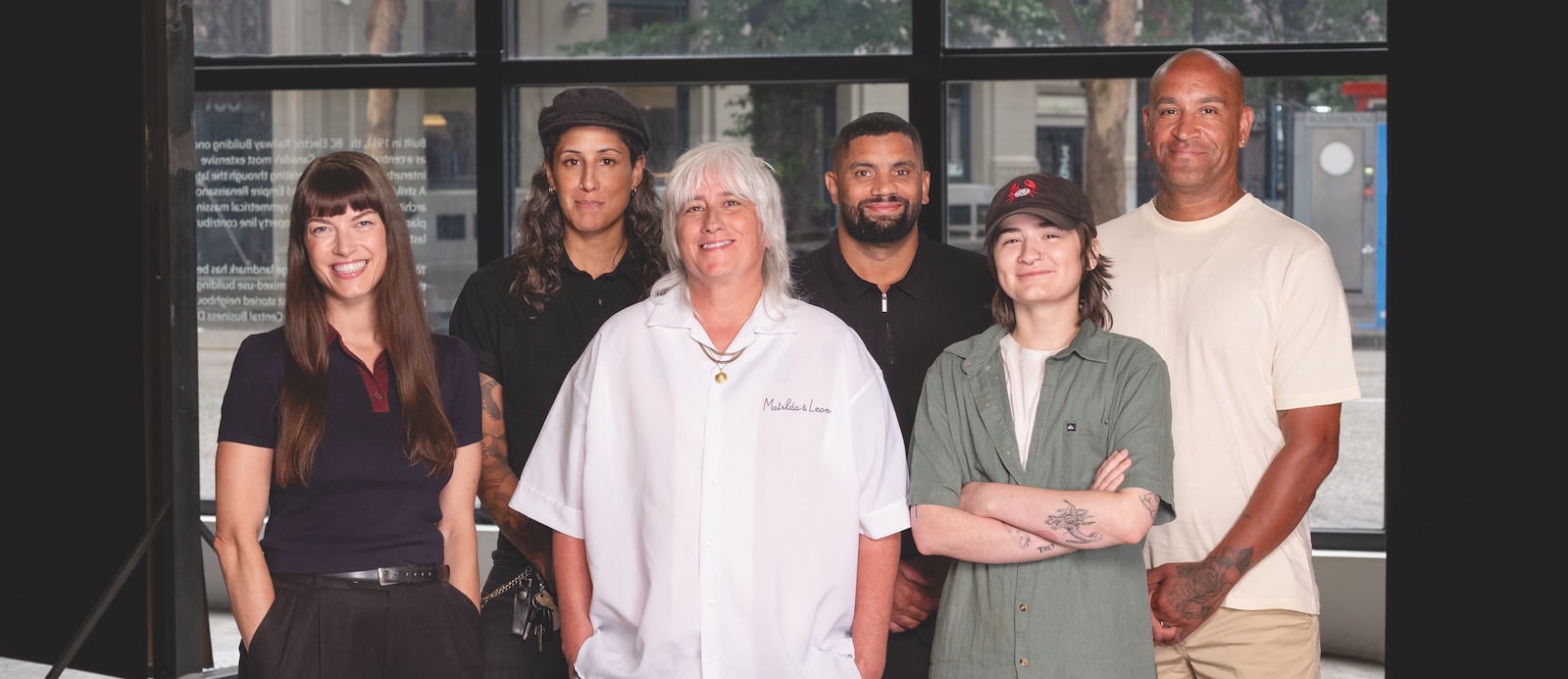
Tara Taylor, Executive Director and the SpencerCreo Foundation team
With the leadership of Executive Director Tara Taylor, SpencerCreo Foundation has demonstrated a deep commitment to creating meaningful opportunities for people with lived and living experience. A small family foundation based in Vancouver, SpencerCreo focuses on a community-rooted, people-first program that provides consistent, wraparound care to individuals experiencing challenges with employment, housing instability, mental health, and/or substance use. Dedicated frontline team members build long-term relationships that are grounded in compassion and consistency to help individuals navigate complex systems, build stability, and take steps toward the futures they envision for themselves. A champion of grassroots change, SpencerCreo Foundation’s efforts to provide mentorship, capacity-building and inclusive employment strategies have contributed significantly to connection and belonging in Vancouver’s DTES.
Q: If you could describe a vision for the future of our community and the people who live and work here, what would that vision look like?
My vision is pretty simple. I want us to get to a place where somebody’s postal code, income, substance use, health, race, gender, or history doesn’t determine how much dignity they’re afforded or what opportunities are available to them.
I’ve worked in the DTES for a long time, and one thing that strikes me is how often we talk about this community in terms of what’s wrong with it. We talk about poverty, homelessness, the toxic drug supply, crime, public disorder. Those things are real, and they have enormous impacts. But if that’s all you see when you look at the DTES, you’re missing most of the community.
There’s so much knowledge here. People take care of each other. They reverse overdoses, find housing for their friends, share food, work, volunteer, organize, advocate and solve problems every single day. I want a future where we value that expertise.
That means people having safe housing, enough money to live, meaningful work if they want it, access to health care without judgement, and places where they belong. And I want people with lived and living experience at the tables where decisions are made — not brought in at the end to validate something already decided.
Ultimately, I’d love to see us move away from constantly managing poverty and crisis and start changing the conditions that create them.
Q: How would you describe some of the common lived experiences, systemic inequalities/inequities and other challenges faced by the people you work with? Do you have any examples that might help explain to folks who aren’t familiar with these experiences how these challenges impact the lives of the people you serve/work with?
Poverty is underneath so much of it.
If you’re living in poverty, almost every part of your life becomes harder. Housing is unstable. Food becomes a daily calculation. Transportation matters. Replacing a lost phone can mean losing access to your worker, your doctor, your employer, your income assistance. Something that might be a small inconvenience for somebody with resources can completely derail somebody who’s already living very close to the edge.
Then you add stigma.
A lot of the people I work with use drugs, have experienced homelessness, live with mental-health challenges, have been incarcerated, or have spent years navigating systems that haven’t treated them very well. People start expecting judgment before they even walk through the door.
One example I often use is employment. We work with people who have incredible skills and enormous capacity, but traditional employment systems aren’t designed for their lives. If somebody misses a shift because their housing fell apart overnight, or because somebody they love overdosed, the response is often, “They’re unreliable.” We rarely ask what happened.
I’ve seen what changes when the question becomes, “What do you need to be successful here?”
That doesn’t mean there aren’t expectations. There absolutely are. But there’s a big difference between accountability and creating systems where one mistake means you’re out.
The other challenge is that people with lived experience are constantly asked for their expertise while being undervalued economically. They’ll be invited to a meeting about homelessness, drug policy or the DTES because their experience is essential, while everyone else at the table is being paid a professional salary.
We’ve got to stop treating lived experience as valuable only when it’s convenient for institutions.
Q: How does your organization / your work help address some of the challenges faced by people in inner city communities? What barriers or opportunities are you attempting to address or create? Are there particular policy changes or other actions that your organization is undertaking to address the systemic inequities you’ve described?
A huge part of our work at SpencerCreo is closing the gap between having ability and having access to opportunity.
Employment is a big piece of that. We’ve spent years creating flexible, supported employment for people who are often excluded from traditional workplaces. That could be peer work in harm reduction, drug checking, community outreach, water programs, community steward work or other roles where lived experience isn’t something a person has to hide; it’s part of what makes them good at the job.
But getting somebody a job isn’t enough.
Our Support Workers help with everything around that job that can make employment possible: housing, health care, treatment or recovery if that’s something the person wants, legal issues, conflict at work, identification, navigating government systems, sometimes just having somebody to call when everything has gone sideways.
We’re also trying to influence how organizations think about employment itself. Instead of constantly asking, “How do we make this person fit our system?” I think organizations should be asking, “What would we change about this system so more people can succeed in it?”
And increasingly, my work is happening at that systems level too, working with health authorities, governments, non-profits and other institutions on how programs are designed, how people with lived experience are involved, how they’re compensated and whose knowledge counts.
I don’t want peer involvement to mean we invite somebody into a meeting once a year. I want people with lived experience involved in designing the program, delivering it, evaluating it and deciding what happens next.
Q: How would you describe the importance of community connections and a sense of acceptance and belonging for the people you work with?
Belonging is huge.
I think we sometimes underestimate how powerful it is to have somewhere you know you’re welcome. Somewhere people know your name. Somewhere your absence is noticed.
A lot of people I work with have experienced rejection from institutions, workplaces, family systems or services. When that happens repeatedly, you learn quickly to protect yourself. Trust takes time.
That’s one reason peer-based work can be so powerful. There’s an understanding that doesn’t always need explaining. And relationships develop in ordinary ways, over coffee, during a shift, walking between sites, sitting with somebody after a difficult day.
Those things can sound small, but they’re not.
I’ve watched employment change people’s sense of themselves. Somebody goes from being identified everywhere as a client, patient, resident or person who needs help to being a coworker. Somebody calls because they need their expertise. People are depending on them. They’re earning money. They’re contributing.
That changes things.
And I think there’s a lesson in there for all of us. People aren’t projects. Everybody wants to feel useful, valued and connected to something. When people have that sense of belonging, possibilities start opening up that are much harder to see when you’re just trying to survive.
Q: Looking ahead, can you share with us some of your thoughts about where you see possibilities for change to happen?
I see a lot of possibility right now, even though we’re also in a difficult moment.
One of the biggest opportunities is changing who we consider an expert.
For years, institutions have been getting better at saying we need people with lived experience at the table. The next step is much bigger: sharing actual decision-making power, resources and jobs.
I also think there’s an opportunity to rethink how we respond to what’s happening in public space. There’s a lot of conversation right now about public disorder, safety and the DTES. Those conversations can become very polarized very quickly.
What I’m interested in is what happens when we build relationships instead.
Can a business owner know the community steward who works on their block? Can somebody experiencing a crisis be connected to a person rather than automatically becoming a police call? Can people who live in the neighbourhood, businesses, service providers and government know each other before there’s a problem?
I think that’s where some of the most interesting change can happen.
And then there are the big structural things we can’t lose sight of: housing, income, the toxic drug supply, access to health care and employment. We can build excellent programs, but if somebody goes back to an unsafe room with $30 left for the month, there’s a limit to what any program can accomplish.
We have to work on both at the same time: the immediate human stuff and the bigger systems around it.
Q: Do you have any stories or examples from your work that particularly give you hope for a better future for the people you work with?
What gives me hope is usually people.
I’ve watched people who were initially hired for a few hours of peer work become some of the most reliable and knowledgeable people on a team. Then somebody starts mentoring somebody else. They’re training new staff. They’re advocating for their coworkers. Eventually, people from outside organizations are calling them because they want their advice. That progression means the world to me.
Because the person hasn’t suddenly become valuable. They were valuable all along. What changed was that somebody created an opportunity where their abilities could be seen.
I’ve also seen people go through periods where everything is falling apart: housing, relationships, health, work, and the instinct in a lot of systems is to discharge them or decide they’re “not ready.” We’ve been able to stay connected, sometimes scale expectations back for a while, then help them find their footing again.
And I’ve seen those same people turn around and do exactly that for somebody else.
That’s what gives me hope. It isn’t some perfect success story where everything gets fixed, and somebody’s life moves neatly from A to B. Real life is messier than that.
Hope, for me, is watching somebody discover that their life and their knowledge have value and then watching them use that knowledge to create opportunities for the next person.
Q: How would you describe the value of developing relationships and collaboration in your work generally and with organizations like Central City Foundation?
Almost everything I’ve been able to do in this work has happened through relationships.
The problems we’re dealing with are too complicated for one organization to solve. Housing connects to health. Health connects to income. Income connects to employment. Employment connects to belonging. Drug policy touches all of it.
So, collaboration can’t just mean exchanging business cards and putting logos side by side on a proposal.
The best partnerships I’ve been part of involve people being able to pick up the phone and say, “Here’s what we’re seeing. Here’s where we’re stuck. Can we figure this out together?”
That kind of relationship takes time and trust.
It’s also why organizations like Central City Foundation matter. CCF has been part of the DTES for a very long time and talks about walking alongside the community rather than arriving with a predetermined answer. That distinction is important to me.
Community organizations need funders and partners who understand that the work changes. A good idea on paper may need to look completely different six months later because the community is telling you something.
When there’s enough trust to listen and adapt, partnerships become useful.
Q: What has support and/or partnership from Central City Foundation meant for your organization or your work?
One of the things I’ve appreciated about Central City Foundation is that there has always been an understanding that community knowledge matters.
I’ve been working in the DTES for close to two decades, and organizations come and go, priorities change and funding trends change. CCF has had a much longer relationship with this community than most.
That history matters.
For organizations like ours, support isn’t only about the dollars attached to a particular project, although flexible community funding is incredibly important. It’s also about having partners who understand why this work looks different from conventional service delivery.
Sometimes the most effective thing we can do is respond quickly to something the community tells us it needs. Sometimes it means paying somebody with lived experience to do work that institutions historically expected them to do for free. Sometimes it means testing something before we know exactly what the final version will look like.
Having partners who understand that creates room for innovation.
And personally, being recognized by Central City Foundation means a lot because I see this award as connected to the work of a much bigger group of people. I’ve learned almost everything I know from community, from people I’ve worked beside, people who’ve challenged me, staff, peers, coworkers and people who’ve trusted me enough to tell me when something isn’t working.
Q: Can you share a call to action for our CCF community?
My call to action would be: get closer.
Get closer to the people and communities you’re trying to support.
If you’re funding something, meet the people doing the work. If you’re making policy, spend time with the people who will live with the consequences. If you’re talking about the DTES, build relationships here, not just when there’s a crisis.
And when somebody with lived experience is invited to contribute their knowledge, value that expertise the same way we’d value other professional expertise. Pay people. Hire people. Give people responsibility. Create actual pathways into leadership.
I’d also ask people to pay attention to the stories we tell about communities like the DTES.
If the only story we tell is one of crisis, eventually we start seeing people as the crisis.
There are serious problems here. We should be honest about them. But there are also incredible leadership, generosity, humour, creativity and knowledge here.
So, invest in that.
Sometimes change starts with a big policy decision. Sometimes it’s housing or income or changing a health system. And sometimes it starts much smaller: somebody being given a first shift, being invited into a room where decisions are being made, or having one person say, “I see what you can do. Let’s figure out how to make space for it.”
We can all do more of that.
 Previous story