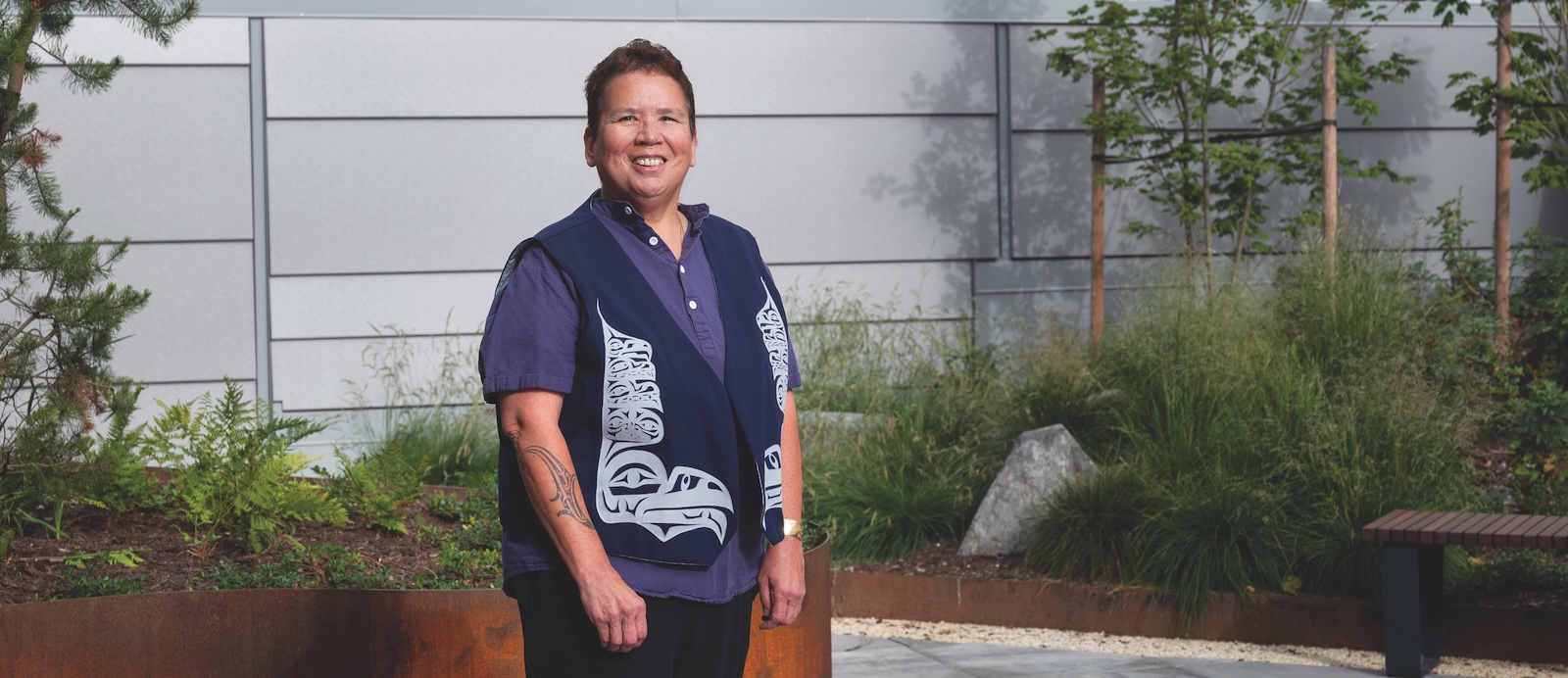
Change Can Happen. Profiles in community leadership: Carrie Humchitt
Central City Foundation is once again celebrating examples of extraordinary community leadership and innovation from the organizations we walk alongside and support. These individuals and their organizations have demonstrated that change can happen in our community. As part of this celebration, we asked each of our profiled leaders to share their thoughts on leadership, community and hope for a brighter future.
Carrie Humchitt, Executive Director, Vancouver Aboriginal Health Society
Carrie has dedicated her life to the health and wellbeing of Indigenous peoples. Through Carrie’s leadership of Vancouver Aboriginal Health Society, she continues to provide trauma-informed care and services rooted in dignity, connection, belonging and Indigenous ways of healing. We are excited to see the opening of the new Indigenous Healing Centre this year, a vision more than 20 years in the making. After more than two decades of partnership, including Vancouver Aboriginal Health Society’s long-standing home at the Phil Bouvier Family Centre, Central City Foundation is pleased to be a partner in this transformative new space, and we know it will bring meaningful change to the people who live in the Downtown Eastside for generations to come.
Q: If you could describe a vision for the future of our community and the people who live and work here, what would that vision look like?
I would like to see people living in a healthy and balanced community where housing is accessible, and people are treated respectfully no matter what walk of life they are from or where they are on their healing journey. Indigenous and non-Indigenous peoples are all humans in the DTES and in Greater Vancouver and deserve kindness and respect.
Q: How would you describe some of the common lived experiences, systemic inequalities/inequities and other challenges faced by the people you work with? Do you have any examples that might help explain to folks who aren’t familiar with these experiences how these challenges impact the lives of the people you serve/work with?
The impacts of colonialism and the harmful multi-generational impacts of residential schools in Canada impact us all, as does the toxic drug crisis in our community and the homelessness of some of our peoples. The abuse and trauma of Residential Schools on Indigenous peoples existed over generations, and the attempted assimilation and genocide are taking generations to heal from, but we are getting there, and culture is healing; access to essential services is needed by everyone, such as affordable housing and fast-track drug and addiction treatment services. These are the impacts of Residential schools; the sexual abuse, drug and alcohol addictions are a product of this. Many on the DTES have gone through many of these and/or traumatic events which led them there.
Q: How does your organization / your work help address some of the challenges faced by people in inner city communities? What barriers or opportunities are you attempting to address or create? Are there particular policy changes or other actions that your organization is undertaking to address the systemic inequities you’ve described?
We work in a community of caring with other organizations and partners who all share the same vision to improve the quality of life for our peoples, for us to provide a culture of caring to our clients, our Indigenous peoples who want a safe place to gather and practice culture, eat traditional foods, have respectful and essential medical and dental services and have programs for the homeless and programs for Indigenous children and families.
Q: How would you describe the importance of community connections and a sense of acceptance and belonging for the people you work with?
The people of the DTES are the most caring and kind community. They help each other. Indigenous peoples in the city come to us because they know they are welcome without judgement. They are all human beings worthy of compassion, respect and access to essential services. We are a gathering place for Indigenous peoples and children, where they can practice cultural activities, enjoy a hot meal, receive assistance for homelessness issues, and have access to medical and dental care in a trauma-informed, safe place.
Q: Do you have any stories or examples from your work that particularly give you hope for a better future for the people you work with?
We had a waiting list for our Medical Clinic for the longest time. Such was the demand for quality medical services in our community of Indigenous peoples in Vancouver that we have now started accepting new patients on our waiting list and with the Medical Clinic’s expansion doubling in size in the new Healing Centre, we will be able to serve more Indigenous clients in the Greater Vancouver area. A lot of our people have faced discrimination and racism in health care systems, and it is essential to offer them safe, trauma-informed spaces where there is a culture of caring.
Q: How would you describe the value of developing relationships and collaboration in your work generally and with organizations like Central City Foundation?
We value our work with our community partners as we share a common vision for a better life for our DTES peoples and Indigenous peoples and families, and Central City’s support has been invaluable to us as an organization and to others they support by spearheading change in the DTES. This is what is needed for meaningful change in the DTES and in Vancouver. There needs to be community organizations like us and Central City Foundation working together towards a common vision and goal of improving the quality of life for all.
Q: What has support and/or partnership from Central City Foundation meant for your organization or your work?
It has meant the world to us to have the support of Central City Foundation in realizing our vision with theirs, so that we can improve the community, have a common vision toward that and put the work in together. This is what is needed for real change, and we can achieve this by working together as a community dedicated to the work they do in the DTES and in Greater Vancouver.
Q: Can you share a call to action for our CCF community?
We can achieve more by paddling together towards a better quality of life for our peoples, Indigenous and non-Indigenous, in the DTES and beyond. Change comes when a community of caring peoples and organizations work together for a common cause. It always has.
 Previous story
